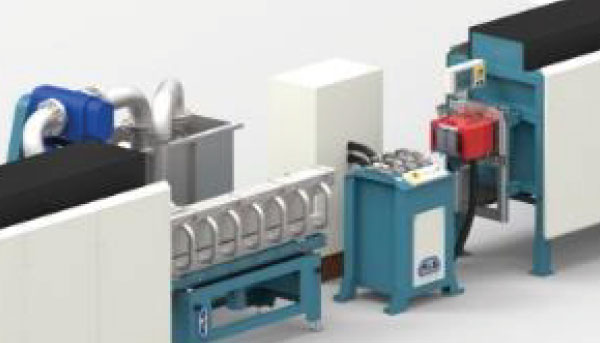
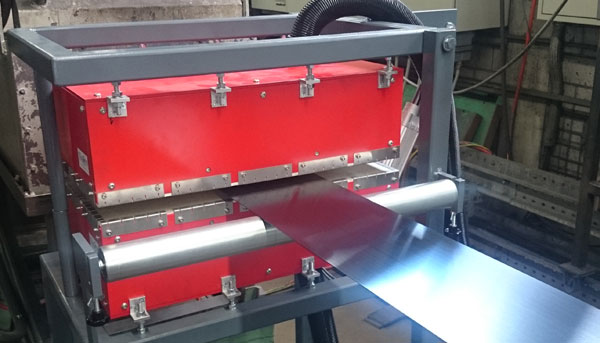
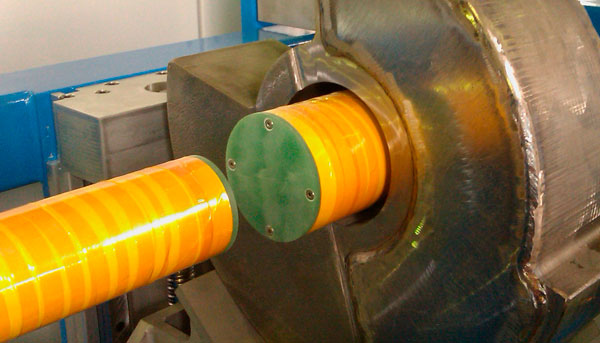
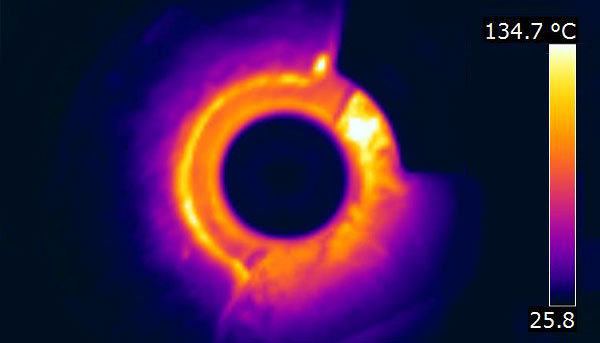
Pre-heating material and products is common in manufacturing industry for example prior to forming, slitting or welding. Pre-heating by induction is a fast and reliable solution for heating in continuous processes prior to furnaces. Pre-heating can also be done as a separate operation heating up a roller or a tool before it is mounted into the production line. By introducing Pre-heating the startup time is reduced or the process line speed can be increased.
Hardening and Tempering
Heat treatment of products in continuous hardening and tempering lines is common for metal strips, bars, rods and tubes. Using induction heating or a combination of induction heating and a tunnel furnace creates a system that is both flexible and energy efficient.
In existing heat treatment lines, the space available for additional power is limited and therefore induction heating with its small footprint opens for introducing booster steps where the additional heating power is needed.
Coloring “Blue Annealing”
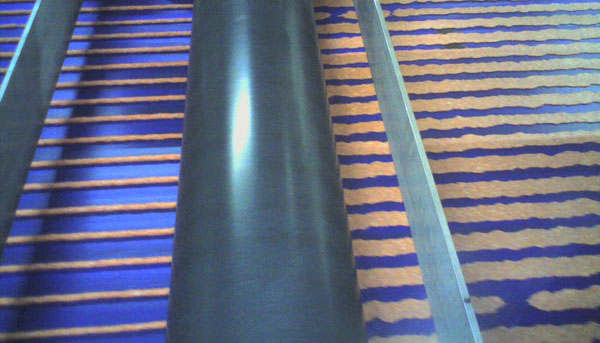
One type of surface treatment of steel is coloring or “Blue annealing” which is caused by an oxidation on the surface at elevated temperature. The different colors are sensitive to the temperature in the strip and the good controllability of the induction heating improves the quality of the coloring. The use of transversal flux heater solutions ensures that no edge effects are seen at the strip edges.
Coating
Coating operations is a broad range of combination of materials and processes. Many of them require heating of the material that are to be coated either Pre-heating to reach a suitable temperature for the coating or Post-heating for curing / drying the coating.
In both cases induction heating is a possible solution for the heating step in the coating process.
Drying & Curing
Drying of coating, laquer or paint is common in the industry. If applied on metal parts the drying process can be aggregated by heating the part by induction heating. If heat needs to be applied to a non-metallic material the heat can be transferred from a heated roller or heated plates which can be heated by induction solutions.
Curing of glue or other sealants in assembly operations also require elevated temperatures to start the curing process and to shorten the curing time. Depending on the geometries and production process induction heating can be a solution for high efficient curing.
Lamination
The combination of materials is in many products a key to performance and many of the joining processes includes heating steps either direct on the material or through heated rollers or belts which supply both pressure and heat for the lamination.
Energy efficient heating can be applied by the use of MagComp Induction heating technology either directly on the material or indirectly by heating rollers and belts.
Shrink fitting
Heating a part to expand one or several holes for mounting axis, shafts or inserts is traditionally done by gas burner systems or in furnaces. If done in furnaces it also means to heat up the entire part an not only the are where the expansion is needed.
Introducing induction heating gives an opportunity to heat only as much as needed for the expansion of the product in the mounting area. This will save energy but also shorten the heating time. Instead of batching components in furnaces it is possible to heat directly in the process line.
Rolling
Rolling mill operations is present in metal working industry but also in the manufacturing of plastic and rubber material. In some rolling operations the entire roll needs to be heated and in others it is only parts of the roll that needs additional heat.
Induction heating can be used for both heating the entire roller as well as certain areas of the roller surface. Some processes also require Pre-heating of rollers to shorten down time for product change and there induction pre-heating is a cost effective solution.
Food processing
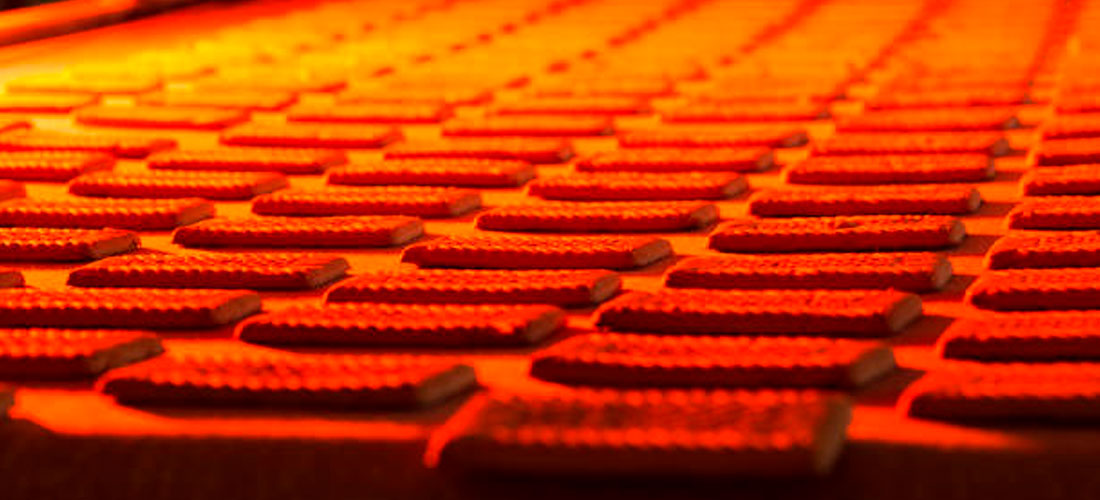
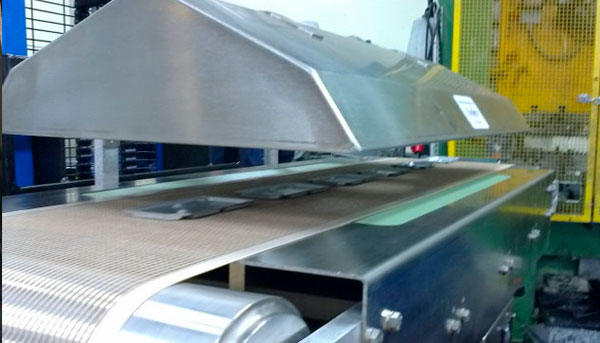
In food processing the need for heating is within industrial cooking, frying and baking. Depending on process several different heating sources is used. Induction heating can be applied as an indirect heating source heating for example rollers that flatten food products, forms for baking, belts in baking furnaces.